About Me

I am a photographer based in Atlanta, Georgia.

Contact Info:
akornylak@gmail.com
www.akornphoto.com
www.weddingsbyandrew.com
In January I was hired by Grassroots Outdoor Alliance to produce a video piece for their retail members. Grassroots Outdoor Alliance is a group of over 70 independent outdoor retailers around the US. Membership in Grassroots gives retailers a strong national voice to "protect and promote the experience of outdoor enthusiasts across the United States." Grassroots also provides resources to its member retailers to support their local activities such as recreational access and environmental initiatives.

The shoot was coordinated by Widgets & Stone, a Chattanooga, TN design studio that handles brand communications for Grassroots. We worked with Chattanooga-local GOA member Rock/Creek Outfitters as an example retailer and backdrop for the video. Grassroots wanted the video for the Outdoor Retailer Show, which was only a few days away once we finalized the project. The stakes were made higher by the fact that this video would be shown to all the top independent retailers in the country - Rock/Creek's main peer group.

It's a situation that happens all the time in this business. Things come together at the last minute and once you get the green light you might have half the time you initially planned for. You don't want to cut corners but maybe it just can't get done in time. What do you do? It's a lot like climbing. You plan carefully for a long climb, wait for good conditions, but maybe by then the window is too short. Do you go for it and pass that line of commitment? Or do you back off, hoping the opportunity will still be there later?

Luckily, having worked closely with Rock/Creek a lot in the past, we had a good game plan going in, and they trusted I could do great work under time pressure. We shot all the footage in an afternoon and the edit came together within 48 hours, just in time for the show. As Rock/Creek owner Dawson Wheeler said later, "Putting a video like this out in front of all the best independent shop owners in the industry made me nervous initially, but Andrew came through with a fantastic video that served the group's needs and went over very well with my peers."

We also produced a separate video that explains what the relationship between Grassroots and a retailer like Rock/Creek is fundamentally about: local ownership and activism, unique customer relationships, and a national platform to promote these ideals.

Grassroots Outdoor Alliance from Rock/Creek on Vimeo.


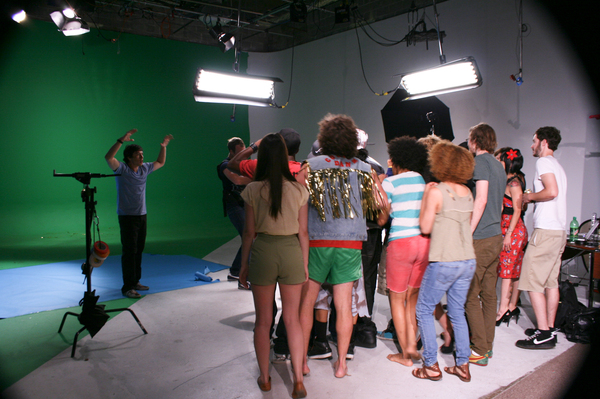
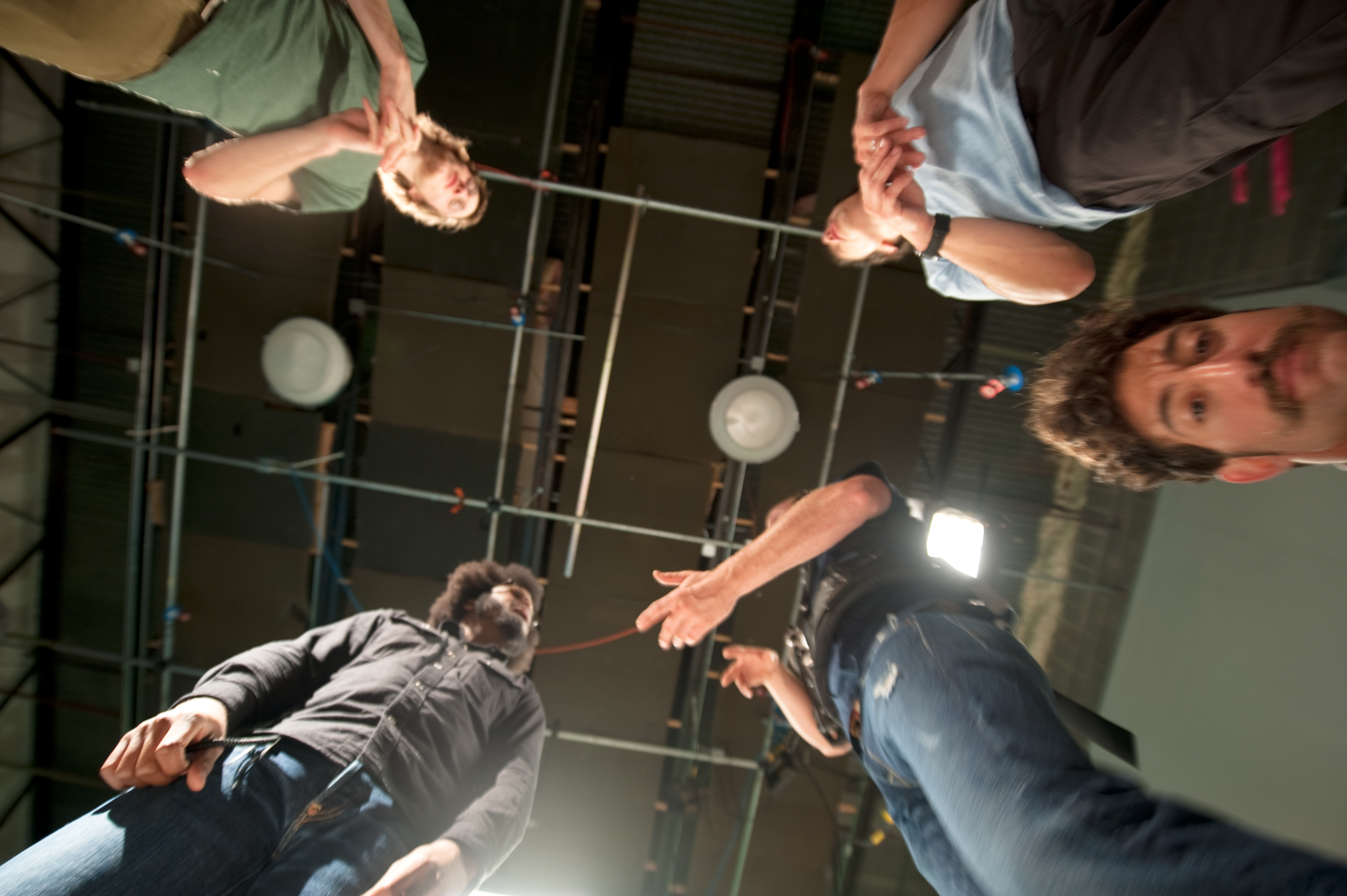
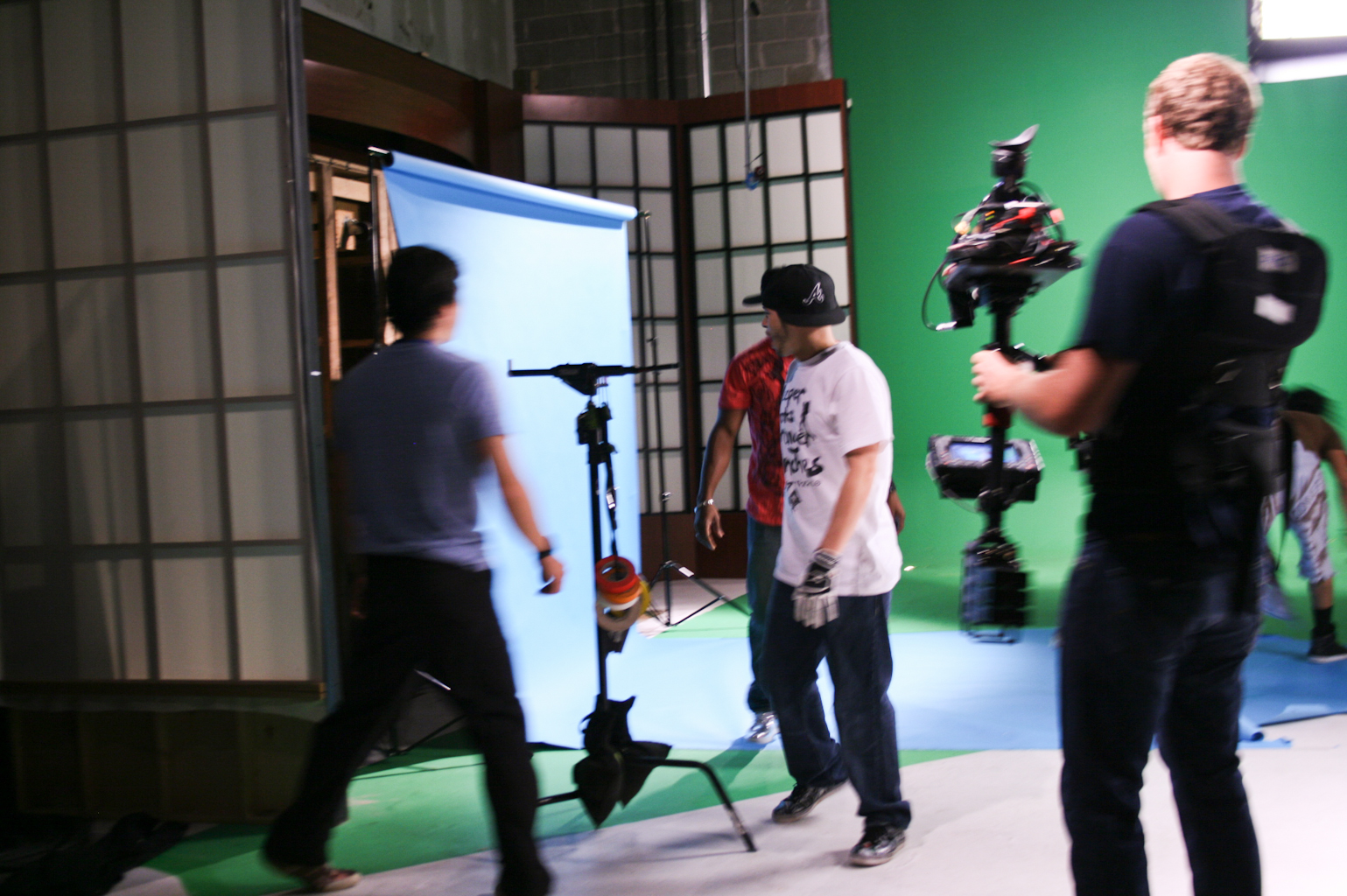
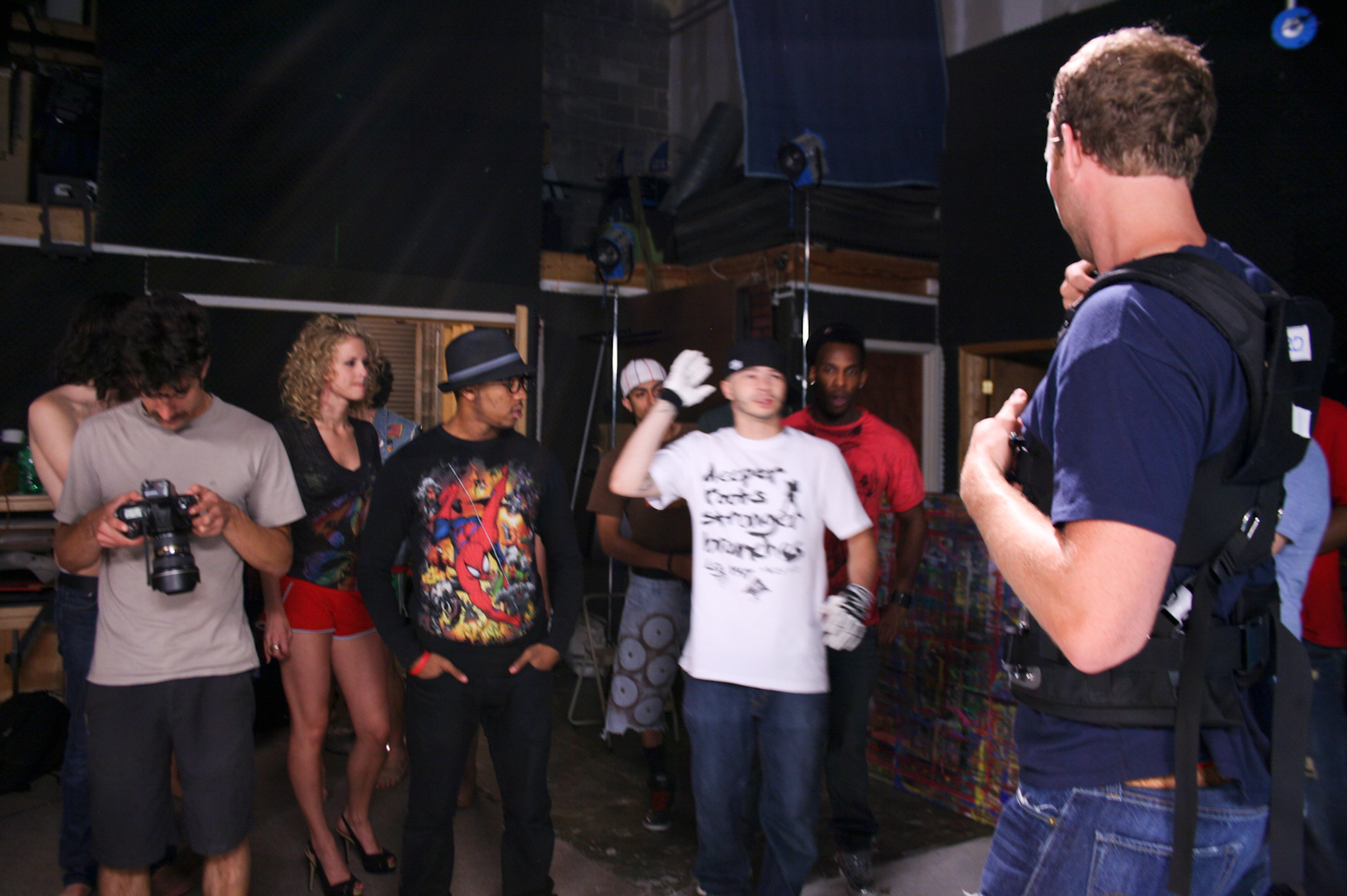
Some behind-the-scenes shots:

Below: Shooting Rock/Creek Marketing Director Mark McKnight with the Panasonic HMC40 on a Redrock Micro 35mm adapter. We combined daylight and a single Westcott Spiderlite fluorescent bank rear and left of Mark. (Rachel Tucker)

4276040591_f74156398f_b.jpg


Below: We shot the landscape footage at Lula Lake Land Trust, a 4000-acre preserve established around the Rock Creek watershed in the mountains above Chattanooga. This was my first time at Lula, and it is absolutely spectacular.  A great reminder of why I live in this part of the country! (Rachel Tucker)

4276791492_93d9ff1f09_b.jpg


Below: Hero Shot (Mark McKnight)

4276397015_b595d54b73_o_dsmall.JPG


You can see more BTS stuff at Rock/Creek's Flickr page

I love working with organizations like Grassroots and Rock/Creek because I can get behind their brand message 100%. That is rare, especially in the commercial world. I believe creatives should be actively pursuing those kinds of clients for themselves, rather than just waiting for clients to come to them to help sell a message. In this case, everyone shared the same passions and ideals, and I think it and added to the quality of the final product. What's more, it made shooting it a lot of fun!

photographers, videographers, writers : I'd love to hear your examples of working for clients whose basic principles you also share!
del.icio.us digg technorati
3 Comments Add a Comment Send To Friend
Mark McKnight:

Thanks Andrew! Great working with you on this shoot. It was a bit nerve-wracking to work on that schedule but it turned out brilliantly. Lula Lake is such a great place too, it was amazing to see it frozen like that.

(02.25.10 @ 12:21 PM)
Jeff Hunter:

Thank you Andrew. And thank you Rock Creek for supporting conservation, trail development and access to climbing for Chattanoogans and all Americans. And especially, thank you VERY MUCH for supporting Tennessee Wild. You Rock!

(02.25.10 @ 07:14 PM)
Dan Newton:

Really beautiful job. Makes me want to shop there!

(02.27.10 @ 12:08 AM)
Listed below are links to blogs that reference this entry: Committed To Grassroots . TrackBack URL for this entry: http://theblindmonkey.com/darkroom/mt/mt-tb.cgi/46
I first met David McLain a few years ago at an agency meeting in the Maine woods. He showed us a video called Santiago, and some of the multimedia projects he was working on for outdoor clothing maker Horny Toad. I was impressed by the mix of his editorial eye and commercial polish, and his innovative use of stop-motion and still photography. We had a conversation afterwards about the impending convergence of still and video technology and he said something about a "still/motion camera" that led me to use the term "stillmotion" for my work.

To prep for my workshop a couple weeks ago on stillmotion and breaking into new media at the Atlanta Photojournalism Seminar, and following on the interview with photojournalist and multimedia pioneer Ed Kashi, I spoke with McLain on his career with National Geographic and his multimedia production company, Merge. It's a look at how an established photographer is wasting no time taking risks and breaking new ground to keep things fresh. Listen up!


Screen shot 2009-12-12 at 9.29.20 PM.png
AK: How did you get started working for National Geographic? 

It had been a dream of mine since high school.  I took the slow approach.  I'm a big believer that you gotta walk before you fly.  Basically I shot non-stop at newspapers and smaller magazines for about a decade.  Jose Azel helped me get a tray of slides (yes, i'm that old) together to bring down to DC and Susan Smith was nice enough to take a chance on me and give me a really small assignment which led to Zip Code assignments which led to feature assignments.  Without Jose or Susan Smith it is very safe to say I never would have got the chance to shoot for National Geographic.  You can check out the most recent story I shot for them in the January 2010 issue of the magazine.


Santiago from Merge on Vimeo.

AK: In 2003 you produced a short piece called Santiago. It's a short fluid motion piece filled with still images and sound that seems to bridge the gap between stills and motion picture. What was special about this piece?

To me what was special about the piece was that early on, Jerome Thelia (my business partner in Merge) and I started thinking about how we could bring his knowledge of post production together with my knowledge of photography in a way that pushed both of us forward to places we could not get on our own.  While our techniques, tools, technology, and approach have changed since then, this is still the driving force behin Merge.  


Medica from Merge on Vimeo.

AK: How did you take that concept and create a production company around it? Was it hard getting clients on board, as a small boutique competing for campaigns against traditional big commercial production houses?

Well, we were both so busy doing our own thing, me with photography and Jerome with Post production for feature films and spots, that Merge was always a collaboration that happened when things happened to come our way.  This was usually the result of clients that knew my still photography hiring Merge to create motion content.  We're going to bump it up a notch next year though.  2010 will be the first time we are going to fully commit to Merge and be more strategic about growing it.


Saturday from Merge on Vimeo.

4. Though Merge seems to be mostly focused on commercial production, Your style is really authentic, with a sort of core outdoor lifestyle look, and your client list reflects that. Who have been some of your favorite commercial clients over the years? Do you ever turn a project down because it doesn't fit with your style?

Horny Toad, the California based clothing company, is the best client ever.  Their CEO Gordon Seabury is really smart and their Art Director, Cari Carmean is one of my favorite people to work for.  Gordon gives us the freedom to do our thing because he trusts us and Cari, Jerome, and I work in a very collaborative way.  Its all about mutual respect and elevating each other.... you  know, the 1+1=3 thing....  That's why we definitely turn down work that does not fit with our style.

AK: You shoot a lot on Red. What brought you to this particular setup?

It was a completely logical progression for us just as Scarlet and/or Epic will be.  With Red and Jerome's back end system which includes Scratch, we own the means of production to shoot, edit, and post a feature length film.  Think about that.... its incredibly powerful.   Check out Jerome's post on our site about it for a more in-depth explanation.

AK: In maybe 5 years the technical landscape has changed radically with the convergence of still and video cameras. In 5 more years it will no doubt be radically different still. What is this convergence doing for storytelling? For commercial advertising production specifically?

We could talk for many beers about this but what is clear to me is that technology has opened up new production models for creating content and new channels to distribute it.  At Merge, we spend a lot of time thinking about both of these things.  Stories will always need to get told but moving forward the way in which many of them are produced, distributed, and consumed will change quite a bit.  In light of this, it might be a mistake to stay totally tied to the old ways.

Screen shot 2009-12-12 at 9.29.51 PM.png


7. You strike me as adventurous in terms of embracing technological change and experimenting, while staying true to your style. On the other hand there is a lot of pressure to find simply chase new revenue streams, or to use new technology as a means of creating buzz. In the commercial advertising world, maybe that is still a valid approach. How do you strike a balance here?

Well, i've never been about chasing gimmicks and have always gravitated toward timeless visuals so its never really been hard to keep a balance.  Sometimes, if you are being paid really well, money is a perfectly fine reason to take a job but most of what we shoot is exactly what we want to.  While Merge provides new revenue streams for me, that is not why I co-founded the company.   If you want to make money, go to Wall St. don't become a photographer.  Merge is about a way to expand my craft and get the same stoke I got watching my first print develop in a tray of Dektol 25 years ago.  I believe in evolving and life long learning which is why I am so into Merge.

AK: Feel free to let anything else fly if you have something burning to say. Thanks again for doing this.

Here is our  new explanation of how we partner.  We spend a lot of time thinking about it and I think it addresses many of the questions you bring up.  Also, we should have some new work up on our site by the end of the month so be sure to check it out....

Thumbnail image for Screen shot 2009-12-18 at 4.57.52 PM.png


Merge conceives and creates visual content for the web, broadcast, print and beyond.  We spend a lot of time thinking about shifts in our industry and evolving our craft: a combination of timeless imagery and fearless embrace of technology.

Merge unites the eye of a National Geographic photographer with a technical fluency built from two decades of post-production and production expertise.   We cut our chops the old fashioned way but are not beholden to habits or structures that no longer make sense.   The old paradigms for content creation, post and distribution have changed.  At our core is an ability to to take traditional needs and seamlessly express them in old ways, new ways, and ways that have not been thought of yet.  Whether it is our nimble production model, a blend of art direction and improvisation, the integration of stills and motion, site specific POS video installations, or the use of dynamic technology like 4K RED and Scratch.  What people who have worked with us understand is that we are naturally adaptable and thrive at the intersection of tradition and change.

Our new model for creating visual content combines the right mindset, experience, and toolbox to offer high production values and efficiencies to our clients.  We think of ourselves as partners rather than vendors and seek collaborations with clients that allow us both to get to places we would never arrive at on our own.  To Merge is to break new ground and grow together.

del.icio.us digg technorati
2 Comments Add a Comment Send To Friend
Michael Carney:

inspiring. That's the only thing I have to say about that. Thanks Andrew and David!

(12.18.09 @ 06:26 PM)
David:

Very inspiring. Thanks.

(03.01.10 @ 05:15 PM)
Listed below are links to blogs that reference this entry: Merge Lane: Interview with National Geographic Photographer and Producer David McLain . TrackBack URL for this entry: http://theblindmonkey.com/darkroom/mt/mt-tb.cgi/42

In the course of producing videos I scan through a ton of music to find just the right track to use. Of course, if you are on a budget, limiting yourself to royalty-free and creative commons music outlets, it's slim pickins. That's where the independent musician comes in. Once upon a time I aspired to be a professional violinist but quickly learned it took way more talent than I would ever have, so I have great respect for anyone who has figured out a way to make it their life's work.


Thumbnail image for l_28a7cee08291e9c5d75486cfb30b0fd6.jpg


Charles Allison is one such musician, out of Chattanooga, Tennessee. I met Charles through my friend Mark McKnight at Rock Creek Outfitters, who suggested Charles as a source of music for some spots I was producing for their trail race series. He owns a recording studio called Spanner Sound.


Charles has a really cool "Song a Week" project going on his blog, charlesallison.org. One thing I like about the music he is producing for it is that every week he experiments with something new. It reminds me of the approach I've been taking with my climbing video series this year, The Beta. And everything sounds great.


I recently spoke to Charles about his Song a Week project, and about what it takes to make it as an independent musician today. I think there is something in here for any creative struggling to make it happen. Click on the players below to hear some of his music from the project:


Week 3-Truth has a way of hitting its target by Charles Allison 


AK: You strike me as not only a musician but a student of all things musical. Did you come to music by the standard route of music lessons as a kid or was there a different path?


I never had any lessons or pressure to play something like a lot of people did growing up. I got a used electric guitar for my birthday when I was about 13. I played around on it from time to time, but skateboarding was my true love at that point. In high school some guys asked me to be in a band with them. I don't think I really even played anything in that band though; I was the singer. I started home-taping in about 1997 with a four track and knew pretty quickly it was something I wanted to get really into. Over the course of recording all the time for the last 10 years, I studied a lot of physics and electronics that all apply to music and why things sound the way they do. I love making things that sound cool, but I'm technically pretty ignorant about music theory and all that.


AK: Your MySpace page lists a lot of wide-ranging musical influences. A lot of times our musical interests are intertwined with important moments in our lives. Put some of your musical tastes in context for me: When and how did you resonate with some of the more dominant ones.


My first pivotal experience with music was listening to my brother's records when he was out on weekends when I was about 9 or 10 years old. It was mostly british new wave and 80's synth pop kind of stuff. When I started buying my own music, it was either punk or alternative. I lived to watch 120 Minutes in high school. I worked in a record shop at some point and definitely honed in on some of my touchstones during that time. I never really stopped listening to anything I ever liked though, just kept adding to the collection. The harder to classify, the more I like it generally.


AK: With no physical boundaries to collaboration these days, seems like young people have more opportunities to express themselves musically. On the other hand they might be robbed of the kind of focused insulation that can foster an authentic style...


I've kind of approached my studio setup with a lot of consideration towards being able to do whatever I want to on my own. I love working with other people but I like to work all the time and I can't expect people to be around when I want to do something or I have an idea to try something. I definitely like having a lot of people coming through the studio to help with the workflow and just vibing off each other. I think being a good musician is very much about listening to and working with other people.


AK: The gap between corporate megapop on the one hand and indie/folk/local music on the other hand is widening. For me that means a wider range of great music to listen to on all channels. For musicians it might mean something different?


I do love the fact that you can instantly release something to the world; it's pretty powerful. But realizing success in the digital age is definitely more complicated than just putting something on the web and expecting people to flock to it. It's an ongoing process just building your work and creating a listenership for it. All the tools are there, but I think generating continued interest in your work is the most crucial element. I'm still learning a lot about that.


AK: What's the scene like for a professional musician in the South? Is Chattanooga a good spot for you right now?


It's alright, I guess. It really depends on what you're trying to do with your music. I'm tethered here for now. I would love to be somewhere that had a more cohesive music scene, with a lot of energy being exchanged between different artists. I got an arts grant this year for my work, so I can't complain about that aspect of living in Chattanooga.


AK: When did you get the idea for the Song-A-Week project?


I don't remember exactly. I started it about a week after I first thought of it though. It's not a new concept, and others have done similar projects. It seemed very much like some of the outdoor expeditions I've planned and done. I rode my bike from California to Florida in 1997 and this is just sort of an expedition of another kind. You set goals and you just do them. My reasons to do it were definitely born out of wanting to do something new with the way that I put music out. I've put out 8 records on my own and am pretty tired of that. It's more about pressure to be finishing something every week and not being too precious about the small details or obstacles, and just being comfortable in the process of making music.


AK: In Song-a-week you experiment with instruments you haven't played much before (banjo), play with binaural recording (recording using headphones instead of mics), and explore interesting sounds and effects (theremin). Yet everything seems to work really well. 


One of my main goals is to work through my skill set to a point where I feel really dialed in to what elevates a piece of work. Whatever type of music it is, just being tuned in to how music works and flows. Part of that is reaching a little bit in terms of what instruments I might automatically turn to. I'm not really great at playing any instruments, so I kinda look at it like "what the hell? Give it a whirl". Recording is really fun for me and I love to try new things. I hope for things to get really far out at some point too. I would love for people to be in disbelief that I made some of these songs.


Week 10- My spirit guide by Charles Allison


AK: You say the "depressed and awkward" are your people. What do you mean by that? Do you identify with that state of mind or is it just your sound that evokes that?


You know, I'm not really sure who my people are. I struggle with depression for sure, but my method of dealing with all that is just working as much as I can. I get really anxious when I can't make something. I do love sad songs, but I don't think that's my music exactly. I don't revel in being depressed, I just find the sound of it infinitely more interesting than the sound of being happy. That's been done enough already. I think I can make my own style of dark music.

Week 11- Take your things and run away by Charles Allison


AK: So as you are falling asleep your mind wanders into a new composition. What then? Specifically, what tools are you using to get the music out?


I don't have a roadmap at all from week to week. I take a break on the weekends but I try to start with some basic concept on Monday or so. Whether that's writing from a particular instrument or evoking a certain spirit, or working from a melody I wrote in the shower I never know. From the concept, I start to build something that becomes, ideally, whatever it should be. Part of doing this project and its length is to be exhaustive with my work process. I guess I feel like I haven't really found my voice yet and hopefully this is a good way to do that.


-akorn
del.icio.us digg technorati
1 Comments Add a Comment Send To Friend
Mark McKnight:

Interesting interview, Andrew. Thanks for posting. It's bee fun to watch Charles through the years as built his music from a passion to something that will hopefully pay some bills! I think the message here is to support independent music- buy songs if you like them, go check out local shows, etc. Give people like Charles the means to focus on their work and I think we'll end up with some amazing music in the world that studios and the commercial system would never be able to generate.

(12.10.09 @ 01:34 PM)
Listed below are links to blogs that reference this entry: A Song a Week from Charles Allison . TrackBack URL for this entry: http://theblindmonkey.com/darkroom/mt/mt-tb.cgi/41

It seems hand-crafted art is alive and well. This month, New Jersey-based artist and former Urban Climber Magazine Editor Joe Iurato landed a commission to create stencil artwork - yup thats right - for NBC Sports. The resulting piece aired on NBC's Sunday Night Football, for the (highly rated) Colts-Patriots game, on November 15th 2009. 

Here is a compilation of clips of the final product from Joe:


I worked with Joe many times during his four years at the helm of Urban Climber. He was psyched on the kind of lit climbing photography I was producing at the time, that no one else would take. The look that Joe embraced early on is now standard in the climbing world. 

I was intrigued by Joe's unique piece for NBC Sports, so I took the opportunity to chat with him about it, his work, and life after Urban Climber. What I got from Joe was an illuminating look into a true artist's life. All photos and videos courtesy of Joe Iurato.

Working_Garage.png


AK: So, a few months ago, you talk to a friend about an opportunity to do something for NBC's Sunday Night Football...

Yeah, long story short, my friend Vincent's a producer with NBC Sports. While attending one of my art shows, he came up with the idea of using my stencils in place of photographs during a broadcast presentation. Next thing I knew it was being pitched to the producer of Sunday Night Football, Fred Gaudelli, and crew -- and soon after that it was game on.

AK: How long have you been doing stencil and aerosol art? What's your background in this?

I've been doing this type of art for about 4 years now, but seriously for less than a year. I've always been a huge fan of street art, or public art if that sounds better. I started out by making this simple stencil of Winnie-The-Pooh holding a machine gun and wearing military attire - he became my "Soldier Bear". It sounds absurd, but that was the whole point. Though as absurd as it was that little image was also powerful, and behind it was a lot of truth. Stenciling provided me an easy way to get it out there and hopefully make people think about how gnarly and twisted shit really is these days. At UC, I would occasionally leave on my lunch break and slap one or two up around SoHo. At home, I would go out late at night and bomb around town. I'd paint it on buildings, slap stickers on phone booths and signs, hit just about anything - but at the time it wasn't so much about the stenciling or the art as it was about the subject. Nobody really knew what I was doing except my wife. Needless to say she wasn't very supportive of my rendezvous, and it wasn't long before I agreed to give it a rest. But anyway that's how I started stenciling.

Later, I developed more of a love for the craft of stenciling itself and decided I wanted to take it further. I studied the work of the great stencil artists, people like Logan Hicks, Chris Stain, C215, Blek Le Rat, Banksy, and Shepard Fairey - not to mimic them, but to get a better understanding of the medium. I learned there's really no right or wrong way to do these things, and techniques vary greatly. So, I came up with a way of doing things that was comfortable and right for me. Now, my work is much different than that first Pooh stencil; it is much more complex and carefully planned out, and I'm not out manifesting images in the street anymore. If I paint the same cut 3 times, it's a lot. Most of my work is done in my garage, on found supports like old cabinet doors and planks of wood. And when I do paint outside, it's usually on a much larger scale.

3133564106_2456c2655d_o.jpg


AK: You sprayed these stencils on acetate, then NBC green screened them and did the rest. Walk me through your method a little deeper. Was this your usual approach or did this particular job make you step outside a little?

Well, as for the method in this case: First, I had to tweak out the images so they'd be partially black and white and partially color as discussed. After they were approved, I had 20 of each photo printed out on 18" x 24" sheets of paper (this isn't always the way I work because it's costly, but it provides a more exacting and consistent cut). Next, I cut each layer from the photographs themselves with an Exacto knife. This is the most difficult part because it's all guesswork and preference. Everyone has different thoughts and techniques on how to approach cutting. It's completely subjective. After the layers were cut, I took them down to my garage, cracked open a bottle of wine and started spray painting. I painted each layer on its own sheet of acetate so they could be photographed individually. In total there were 41 layers for 3 paintings. I also painted one final composite of each image. Lastly, I sent them off to NBC, where they were photographed against a green screen. The final images were uploaded to an effects program and rendered as seen on TV. 

The whole thing definitely forced me to step outside my comfort zone. Aside from some big technical challenges I was facing with the stencils themselves, there was also that scary little voice that kept reminding me this was one of the biggest opportunities of my life...and what if I blew it? Without going into details, the stencils had to be cut in a way I never cut before and painted on a support I wasn't familiar with using. Take that and consider it was all being done for a primetime NFL broadcast, one of the biggest games of the year, that was only two weeks away...let's just say experimenting isn't what I would've preferred. But sometimes you just gotta run with it, really believe in yourself and bust your ass to make it happen.

AK: This seems like a pretty unique gig - custom graphic design for a broadcast network. Is this the first time you have done work where your art meets digital technology?

Definitely. Even when I was making climbing videos, I never thought to incorporate my art with special effects. That's what was so nice about this gig I think. It's not really about my art - it's the proof that even with all the graphic software out there, there's still a place for handcrafted artwork. 

AK: I like the building effect of the individual stencils that make up the final piece. Was that effect your idea?

Stenciling is naturally done in layers. The idea, which is to the NBC's credit, was that these layers would be photographed separately and then rendered in an animation where the images quickly "rebuilt" themselves on screen. One of the reasons it wasn't done digitally is because layering and color separations are two different things. In order to provide the effect they wanted to achieve, you couldn't just separate the colors. To do it digitally, someone would've had to draw these like stencils in an illustration program, layer for layer, anyway. Airing a digital illustration wouldn't quite feel the same as an authentic spray painted piece. I guess some would argue it's the difference between film and digital in photography. There are differences, and there's a place for both.

AK: How has the response been? Any feedback from NBC? You're gonna need a reel pretty soon!

Feedback was excellent. It was such an honor to have been given the chance, and I'm ecstatic it worked out for all of us. I'm looking forward to what's next.

3935219377_911b7d4b2e_o.jpg


AK: It looks like you've got your hands in a lot of cool collaboratives like Artsprojekt. 

Yes, I'm involved in a few collectives and collaborations. Artsprojekt.com, an amazing platform created by artist and ex-pro skater Andy Howell, is one of them. I'm also involved with Stencil History X, NOLA Rising and most recently with Albus Cavus. I've also been collaborating on special projects lately. The photographer Transgress and I have been collaborating for some time now on a series of portraits called "Why". Photographers Craig Copelin and David Toth, musician Abel Okugawa and myself are also beginning a new endeavor, one that will fuse live music and art performances with photography and video. The past few months have brought about some other extremely exciting collabos as well, though I'm not free to talk about them just yet.

AK: As an artist, what kind of resources are out there for you to grow creatively? Financially?

Purely as an artist, there are a tremendous amount of resources out there to grow creatively. For me, the number one factor in creative growth has always been inspiration. If you can stay inspired, you can continue to create work from the heart - work that's not forced - and if it's coming from the right place, people will notice. Once you make those connections, doors also open with the possibility of earning. 

On the flipside, I'm not in a position where I can just be inspired, make lots of creative friends and live as a struggling artist. Growing financially as an artist, really growing financially, is extremely difficult. It's nothing that has recently taken me by surprise, though. I've always been a victim of my own head - my whole life has been centered around expressing myself through the arts. I've worked in some capacity with just about everything: illustration, graphic design, words, photo, video, fine art, and even some performing arts, including acting for a little while. That's my biggest problem; I never really locked myself into any one thing. I want to do it all. For instance, when I want to convey to someone the feeling of being in the mountains and climbing these huge, beautiful chunks of granite, I don't want to sit down and draw a picture of it - I want to use music and moving pictures and tell that story through video. When I want to capture the emotion of a person looking to the heavens with sadness and contemplation, I'll freeze that moment in a painting because their eyes are the story, and it's something that shouldn't fleet. There are times when nothing visual can express what I'm feeling, so I paint those pictures with words. And while it all feels really liberating to me, I'm trapped at the same time. How do I make a living and support my family with all of this? Yes, I am driven by my creative instincts, but is that enough? I don't have a formal education so it's all hustle and I'm constantly trying to prove myself. How long can I sustain being a full-time artist not knowing when and if the next project will arise? The truth is I don't know...

Screen shot 2009-11-22 at 11.55.12 PM.png


AK: A lot of your work I've seen online seems to revolve around a theme of childhood...

Ever since I had my son, my perspective on what life is about completely changed. The moment he entered this world, everything I thought I knew just shattered and went away. As we get older, life becomes more and more complicated until eventually we're all just balls of information and clutter. I needed to unlearn a bit and be brought back to a simpler time. My son did that for me, and it was the greatest gift I ever received. So, every now and then I paint pictures of children because we can all learn, or unlearn, a thing or two by gazing into the wondrous eyes of a child. 

AK: I know you from the climbing world, when you were Editor at Urban Climber Magazine. From what I see now, it seems like that was a small part of a larger artist's life. How does photography and your time at UC fit in?

Climbing, and bouldering more specifically, has been a cornerstone in my life for a long time now. Almost immediately following my first experience in the Gunks I realized that it wasn't a new hobby I found - it was a real, honest-to-God piece of who I am and who I'd forever be. The day was a total revelation. And I was so intrigued by what it had done to me that I felt I needed to explore the reasons why. 

I wanted to sink every ounce of creativity in my bones into interpreting what I thought climbing was. I couldn't focus on anything else because all of my inspirations were coming from my own personal experiences at the crag. It was the kind of feeling you get when you know the answer to something but you just can't get the words out to explain it. So, you search around the question for anything that might spark the tongue to work. That's how I felt all the time. It drove me nuts because I knew it wasn't about drawing or painting a picture. It wasn't about writing a poem or creating a sculpture. I needed to be able to recall my sentiments and share them in a way others could feel what was happening inside me. It had to be fleeting, changing with each unique day. With that in mind, I decided to try something different - I picked up a shitty little camcorder and started making videos. Eventually that's what led me to meeting Mark Crowther, the publisher of UC.

3275948187_0a92e09cd9_o.jpg
I remember the day he called and asked if I would be interested in sitting at the helm as editor in chief. I thought he was joking because I didn't know shit about editing or publishing. I declined at first purely because of fear. But he convinced me by saying all I had to do was be a climber and an artist. Do what I do with video, let my passion speak and my emotions do the work - and that that I could learn the technical side of being a magazine editor. So, I held the position for almost 4 years. Not a day went by I didn't appreciate where I was and what I was doing, but the job itself never really got easier for me. I struggled with learning how to be a great editor. It was such an incredible challenge. I don't know, I still think I had a long way to go in the learning process. All I know is I loved spilling my guts out about all the things climbing taught me; I loved hearing the stories from people all over the world who shared the same sentiments; I loved seeing our sport grow and being in a position to help to push it in that forward direction; and maybe more than anything, I loved knowing the community on a personal level. You know, I didn't choose to leave UC. I found myself on a very personal mission and I wasn't done yet. But all the same, I can understand why I had to go. It's economics, smart business decisions, and that's all. I'm grateful I was given the chance. Now, I hope to find another outlet that will allow me to continue what I started. 

AK: Whats :02 for Joe Iurato?

Haha. I like that. I guess I should explain, :01 sort of became my mantra. It represents a new beginning, the very first second of movement in a forward direction. I came up with it after I was let go at the mag. It was a really difficult time for me, one that I won't go into too much detail about. I just went into a complete failure mode and I was stuck there. I started painting more and more because every time shit hit the fan in my life, painting was the drug that pulled my head out of my ass and provided some relief. Eventually I gained a little bit of clarity and focus and I told myself that I was going to move forward. I adapted :01 as my alias and it's who I've become. 

As for :02, I really have no idea. As I mentioned, I hope to come back into the climbing industry at some point, though I don't know exactly when or how. I only know I'd like to be a creative force again. Aside from that, I'm going to continue stenciling and strive to push my art as far as I possibly can. I know for sure I've found a medium that I love and won't quit under any circumstance, whether it brings me financial success or not. I've got some really cool projects and collabos lined up for the near future. It's also possible I do more work with NBC. And I have plans to paint with one of my favorite artists, C215, in the streets of Paris...which, of course, will be during my next trip to Fontainebleau. 

All in all, I really don't know too much about what the future has in store. We'll see. Tomorrow is far away. I'm still working on today. 

You can see Joe Iurato's work at www.wix.com/joeiurato/01
You can contact him at joe.iurato@gmail.com

You can see more behind-the-scenes footage of Joe Iurato at work here:


Timelapse Video by Craig Copelin (www.nilepoc.com)
Music by Abel Okugawa (www.abelokugawa.com)

del.icio.us digg technorati
2 Comments Add a Comment Send To Friend
J V:

Nice Joe! This is good to see. Joe was the first unknown to encourage me, and gave me my first break into the climbing industry.

(11.23.09 @ 01:07 PM)
Abel:

Joe , you really are cool ! look forward to more collabos !

PEACE ABEL

(12.01.09 @ 04:55 PM)
Listed below are links to blogs that reference this entry: After Sunday Night: Joe Iurato . TrackBack URL for this entry: http://theblindmonkey.com/darkroom/mt/mt-tb.cgi/39
Manpower, Part 2:


Washerwoman and Monster from camp. Zack stoking up.
T-MP-0173 2up.jpg


Sunday, March 14:

Trent: It was getting late and I wanted to get back to camp before it got dark. I waited for Chaz to fiddle with his shoes and then fiddle with his pack. I didn't want to just leave him but I wonder if he realized that he was risking us having to walk down in the dark. We finally ended up descending to camp ourselves rather than waiting for Andy, Zack and Devin. I wonder if they were pissed that we didn't wait? Soon it was clear that we were lost. It was a little bit of a scary feeling, but we knew we couldn't be more than an hour from our camp. It was cold as soon as we stopped! Chaz was shivering and ended up spooning against me for warmth. I was not thrilled about it but "you got to do what you got to do". Then it started raining. ...I think I slept a lot better than Chaz. I suggested he wrap his legs with our Bluewater double ropes. It took half and hour in the morning to get all the knots out.

Chaz: An amazing day on washer woman and monster, and a long, fucking cold night pretty much sums up day 2. 

Two towers in the bag. Heading out from the Monster group to Monument Basin
T-MP-0248.jpg


Trent and Chaz stumbled back to camp the next morning, just as the rest of us were gearing up for a rescue mission. They were tired and ragged-looking, but after hearing their story, our tension gave way to laughter, and with two towers already down, we decided to take an easy biking day and plan for the next climb, of Standing Rock, a 320-foot flute of layer-caked rock jutting from Monument Basin, 15 miles away. The climb was described in an old guidebook as "the most serious and dangerous route in the desert."

Nuts. 
T-MP-02b6.jpg


Monday, March 15:

Chaz: A pretty chill ride to Monument Basin and some resting under the shade of a juniper helped speed a recovery for the next day's ascent of Standing Rock, which will hopefully not topple over by morning.

TrentStanding Rock looks like it's tipping over a little. I think we were all a little intimidated by how narrow it looked. Chaz and I took a nice nap while everyone else hiked in to check out the tower.

Standing Rock, just barely.
T-MP-030b.jpg


Zack: Tomorrow is the climbing day that tackles the tower. 4 pitches: 10b/c, 10d, 11c, 7. Lots of work and I'm trying to get my head together. I'm not concerned about act of doing the pitches; it just looks so sketchy from here. The tower looks like it could tip over at any strong breeze.. I'm sure it won't seem so thin and shaky when I'm 2 feet away from it. The desert is so beautiful! 

Halfway through our trip, we were using more food and water than we had planned. We'd soon have to face some tough decisions about our style. During the next few days, the stress of climbing, biking and staying self-contained would test us.

Sunrise at Monument Basin
T-MP-0322x.jpg


Tuesday March 16:

Zack: Gorgeous sunrise! An awe inspiring walk across the basin floor to the Standing Rock. One of the most eye catching, intimidating things I've ever climbed. Sketchy, and at 5.11c,  harder than anything I'd done in the desert. 

Desert Rack
Thumbnail image for T-MP-035d.jpg


DevinClimbing Standing Rock went off without a hitch. As usual, Zack and Trent made it look easy and kicked ass on a lead that would have scared the shit out of me. Tomorrow will be a long, hard biking day, about 27 miles. Water is becoming somewhat of an issue.

Left: Trent leading Devin up the first pitch of Standing Rock. Right: Pitch 2
T-MP-0385 2up.jpg


Zack: We're down to two gallons of water a piece so it must be getting close to time to go home. I have one more tower to climb and lots of gnarly uphills to bike, but I know the end is within reach. Today was the roughest biking day so far. A lot of uphill pushing. These cadis flies and mayflies are about to cover me up. 

Chaz resting after the last hill of the day
T-MP-03fb.jpg


That afternoon we headed a few miles down the trail for another campsite. We had some gnarly climbs, and had to team up to push eachothers' bikes up the last hill. The riding was getting really hard and we had a day's worth of water left. 

Miles to go. Headed down to the Green River on the longest biking day of the trip
T-MP-469.jpg


The next day was a huge amount of biking, and as we neared the Green River, our only hope for water, we hit sandy sections you could barely walk, much less ride. I hung back a little, partly to take photos and partly because I was whupped. Chaz, being the strongest biker, was constantly offering to take gear from each of us to lighten the load, and always seemed to have an extra Snickers bar in a hidden pocket. As I crested the final hill to the river, I was astonished to see Trent filling two empty jugs with fresh water from a woman in a Jeep.

Left: Chaz on mechanical duty. Right: Zack under some rare shade near the Green River
T-MP-0460x 2up.jpg


Wednesday March 17: 

Chaz: 10 miles of rolling downhill along the White Rim past Candlestick Tower brought us to the banks of the Green River. A casual lunch of peanut butter and tortillas followed by rest in the shade of a Cottonwood. 

Trent: Some lady offered us water and I let her fill up one of my 2 gallon jugs. Then everyone else reminded me that we were self contained. I felt stupid. We then filled up some jugs of water with river water. Zack and Chaz swam in the river for a while. I really wanted to get as far as possible into Taylor before dark but I didn't feel like telling them not to swim. We started biking into Taylor Canyon towards Moses and encountered a lot of sand. Zack finally protested and said it was a waste to keep going all the way into the canyon. He said he had looked at the map and since it was relatively flat, it was going to be deep sand the whole way. We camped in the wash and made plans for an early hike and then climb. I sensed a little tension in the group. Zack explained how he knew the shit would hit the fan and how he was ready for it. Zack decided he would get up at 3:30am and hike the remaining 5 miles into Moses. ... I didn't say anything. 

Chaz wading into Green
T-MP-04cf.jpg


Zack: To think we climbed Standing Rock yesterday morning is sick. It seems more like a week ago! I'm tired and hungry. I'm down to less than half a gallon of water with two days left. We got water from the Green River today but it's murky and kinda sketch. Tomorrow we climb Moses, the last tower on the list. The approach is 6 miles off the main trail. We stopped, bivyed, and will wake up at 3:30am. The whole trip culminates tomorrow. Today was the first sign of difficulties. Team dynamic becomes apparent and very visible. I believe now is go time. Buckle down, do the deal, whatever it takes. Climb Moses and get the hell out of here self-contained, under Man Power! 

3:30 AM. Moses.
T-MP-04f5.jpg


Thursday March 18:

I was personally pretty cashed and I knew this day would be a killer. We thought we could bike the 6 mile approach from camp, but it was all soft sand, so it turned into a 12 mile round trip hike. Pretty much out of food, and with the last water supply at camp, we had to decide whether to camp another night after the climbing, or gun for the trailhead on the canyon rim, a full days worth of biking away and uphill the whole way.

To try and speed things up, I decided not to join the team on the climb. I explored the area and photographed while everyone else tagged the summit. It was a beautiful day, but part of me regrets that decision.

Looking back 6 miles toward camp from the base of the first pitch of Moses
T-MP-050f.jpg


Trent at the base of Moses, and Primrose Dihedrals (5.11d), Pitch 1
T-MP-0528.jpg


Trent: We got up and hiked in to Moses. It was still very dark and cold. Chaz seemed extremely tired. He would take twice as long as me to follow the pitches. I felt bad and tried to console him even though I knew time was of the essence on the trip.

We took some cool photos on the summit and began rapping down the north face. We then began hiking back to our camp in the wash. It was getting extremely hot. We sat under one of the tarps and rested. Zack proposed the idea of biking all the way back to the truck and driving home. The map came out once again. I believe there was way too much map analysis. We made dinner and boiled water. I wanted to bivy but Zack and Andy were jacked on coffee and wanted to keep riding. A vote was taken and Chaz was the deciding vote to go all the way back to the truck. I was a little amazed after all the climbs we did together and how much he had slowed me down. I guess my emotion boiled up and I said "thanks a lot Chaz". He freaked out a little because he has this need to make everyone happy. He then said he wanted to camp at the top of the hill as a compromise. I could feel the tension between everyone.

Mid-day back at camp
T-MP-0560.jpg


After some grueling but mercifully hard-packed biking, we gained mesa at 9:30pm. The next morning at the rim we were elated. Though we had no breakfast and just a few sips of water left, everyone looked forward to a casual few hours of flat biking to the car. That's when most of the journal entries, and the photos, stopped. 

Psyched! Devin on the morning of day 7.
Thumbnail image for T-MP-0579.jpg


Friday March 19 : 

Andy: We suffered today. Out of water. We rode on seemingly endless hard pack, up and down hills, across a barren landscape, constantly stopping to examine the map, in hopes that we were getting to a shortcut that led to pavement. At the shortcut, I was bonking, so was Zack. I asked if anyone had food left. Chaz miraculously produced several Clif Bars, chocolate bars and a precious Snickers, which Zack and I devoured. Taking the last swig from my bottle, I felt at least able to go the 3 miles or so in the growing heat until pavement. The shortcut was twisty and sandy. Lots of walking, and silent resting under the paltry Juniper trees here and there. 

I sucked my tea bag dry, which I had brewed last night in river water. The group was spread out. I saw what I am fairly certain were mountain lion tracks over the fresh bike tracks ahead of me on the trail. I thought about how the pride seeks out the weakest member of their prey, the lame one lagging behind. I increased my pace, but I had no more hammer left. I had kept a strong pace on the switchbacks last night, full of hype, but now as I realized  that today would be at least as grueling as the last six, I was demoralized. I felt strangely sleepy and found myself thinking about how cool the sand might be to curl up into. How long would they go ahead before they turned back for me? Would they find me devoured by lions? Not such a bad way to go, I remember thinking... 

And then we were at the road! No elation yet, we still had miles to go, but I found extra strength, my tongue swelling, stomach in knots, legs jello, brain pudding. I stupidly tried to shift my gears lower and lower, even though I was walking the bike. 

Finally in the distance: the entrance station! I was so happy. We had put together this crazy project and here we were, finished! 

Done, doner, donest.
Thumbnail image for T-MP-0584.jpg


We descended like locusts on the nearest convenience store, hungry, tired and elated. On the way out, passing the train of jeeps and trucks laden with bicycles and gear queued up for the Trail, we felt we had accomplished something truly special. By being bold in our objectives and committing ourselves to a principle, we had climbed a proud desert-rat's tick-list, biked a fat-tire dream ride, and spent six nights under the stars of the southwest desert, all in one trip.

To propel oneself slowly across the still-awesome American wilderness is a profound joy. The window of opportunity for this kind of adventure in our public backyard is still open to anyone, yet it dims and sags with time, neglect, and the "march of empire." Once that window is closed, we may gaze through it and remember, but it will be closed forever.

del.icio.us digg technorati
2 Comments Add a Comment Send To Friend
J V:

like

(11.16.09 @ 06:55 PM)
markguycan:

again, thx-
see link to our- more-modest- adventure!

(02.21.10 @ 12:53 PM)
Listed below are links to blogs that reference this entry: Manpower, Continued . TrackBack URL for this entry: http://theblindmonkey.com/darkroom/mt/mt-tb.cgi/37