

Since I started doing "Stillmotion" pieces a couple years ago - creating video using short, high-speed bursts of still photographs - a lot of people ask me for a step-by-step roadmap to the technique so they can do it themselves.

Here are a couple of the more popular examples:
In Line from Andrew Kornylak on Vimeo.
The Beta - Six Feet Under from Andrew Kornylak on Vimeo.
You can see most of the ones I've done at my Stillmotion album on my Vimeo Page
It's something I've talked about in detail in a Guest Blog for Scott Kelby, on Robert Benson's blog, on the NikonRumors website, and as a speaker at the 2009 Atlanta Photojournalism Seminar, but I've never really put it all down step-by-step.
Recently Digital Photo Pro Magazine interviewed me about it, and they did just that, spelling out in gory detail exactly how to do it. So stop bugging me about it.
Seriously though, It looks like a ton of steps but really, its hella simple. You just need to make sure you have the right tools. I happen to use Nikon DLSRs for capture and sequence everything in Final Cut Pro.
One thing DPP did not ask was, "Why the hell would you do it?" It does look pretty cool, and it's novel. That's probably enough for me. But maybe the benefits versus video (extreme resolution, access to unique lighting and shutter effects) do not outweigh the pain-in-the-asses (difficult frame rates, extreme workflow challenges, no sound). It's a question I ask myself, especially given that there are so many amazing video capture tools out there today - most of which I use daily for other productions.
So here's something: I believe that in the future, there will be full motion-capture technology that is very similar physically to what I am doing with a high-speed still camera. I want to be first in line for that, and I'll know exactly what I'm doing.
Chew on that, try it out yourself, tell me if I am full of shit, and enjoy the article:


Listed below are links to blogs that reference this entry:
Stillmotion Explained, Other Stuff Not Explained.
. TrackBack URL for this entry:
http://theblindmonkey.com/darkroom/mt/mt-tb.cgi/53
Recent work for Mercedes Magazine, shooting German Masters champion Bernhard Langer and soccer legend Franz Beckenbauer. Also making an appearance was the new 2011 SLS AMG Gullwing. Das ist der Hammer!
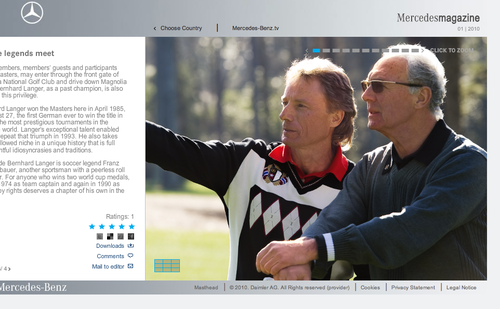
Go grab it at the dealer. The magazine, or the car.

Listed below are links to blogs that reference this entry:
Mercedes Magazine
. TrackBack URL for this entry:
http://theblindmonkey.com/darkroom/mt/mt-tb.cgi/49
Last month I shot my seventh editorial assignment for Boys Life Magazine. 50.25% of you might remember this magazine from your good old days. You might also be surprised to learn its still around. Boys Life is the flagship publication of the Boy Scouts of America, which celebrates its 100th anniversary this year.
On this most recent assignment I spent several days backpacking in the snow, in the mountains, with plenty of heavy weather and difficult terrain. If you aren't involved in Scouts (I was not) you might be surprised to learn that this is a pretty typical Scouts outing.
Boys Life assignments I've been on in the past include kayaking to an island and camping off the Georgia coast, building and sleeping in snow shelters on frozen lakes in Minnesota, and a week-long backpacking trip through Isle Royale National Park.
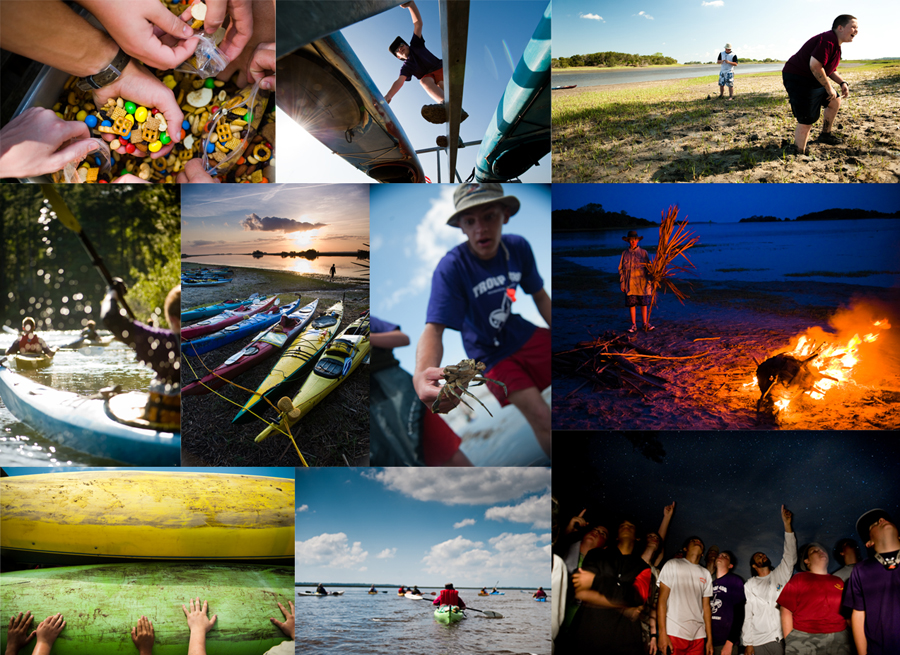
Below: A group of scouts from coastal Georgia spend a weekend kayaking to Creighton Island and camping under the stars. We were accompanied by a film crew shooting and episode of Boys Life TV called "Scouting for Adventure" for the Outdoor Channel. This story is in the most recent, July 2010 issue of Boys Life.
Below: Scouts build snow shelters known as quinzees on a frozen lake in Minnesota. Using snow shovels, the scouts spent all day making mounds of snow which they would then bore into to create warm shelters which they spent a subzero night in. An unrelated but popular tool was a manual auger for drilling holes in the ice. This story appeared in the February 2009 Boys Life.

These kids have some great adventures, more than most of us in fact, and I'm always excited to get the call from Boys Life, because I know I'm in for another great trip. In addition, these kids and their adult leaders are some of the friendliest, most psyched people I've been with "out there".
You only have to witness a group of determined 9-12 year old kids fording a 50-foot-wide wild river, followed carefully (but not-too-closely) by their dads, to see that these trips can be life-changing for both father and son. That's something I can appreciate as a dad myself.
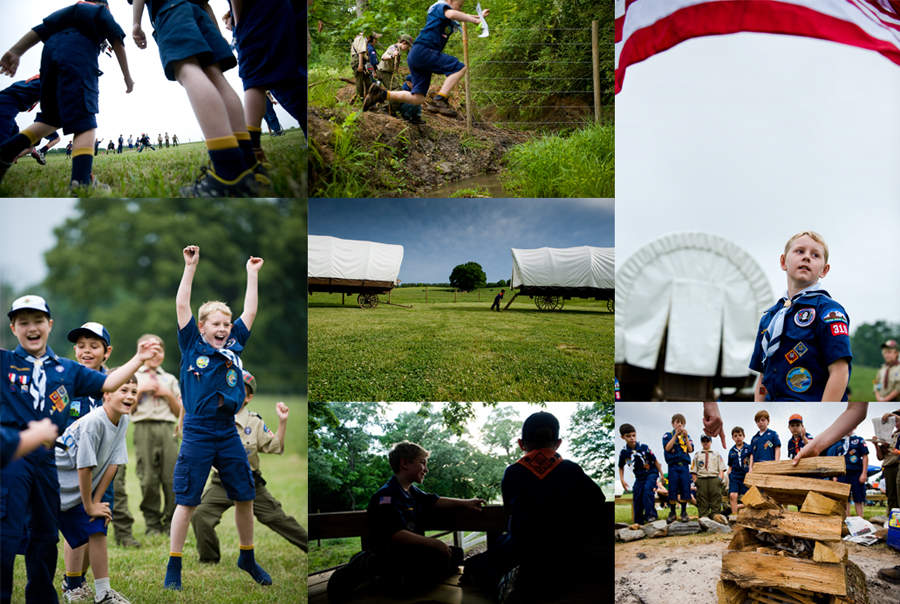
Below: A group of cub scouts from Georgia spent a night in conestoga wagons at the Rock Ranch, a 1250-acre working cattle ranch in middle Georgia owned by Chick-fil-A founder, S. Truett. Along the way they learned a variety of basic camping and navigation skills. This story was published in Boys Life, June 2009.
Boys Life has a great, engaging website, and you can see right away who their audience is. But if there is a reason for maintaining a print magazine, it's for a kid-oriented magazine like Boys Life. Their demographic probably doesn't spend much time sipping coffee in front of a screen on a work break.
If you are like me, when your kid comes home from school, you want them to get into something tangible: paint something, go sledding, climb a rock, or share a book or magazine with the family.
Happy 100th fellas!
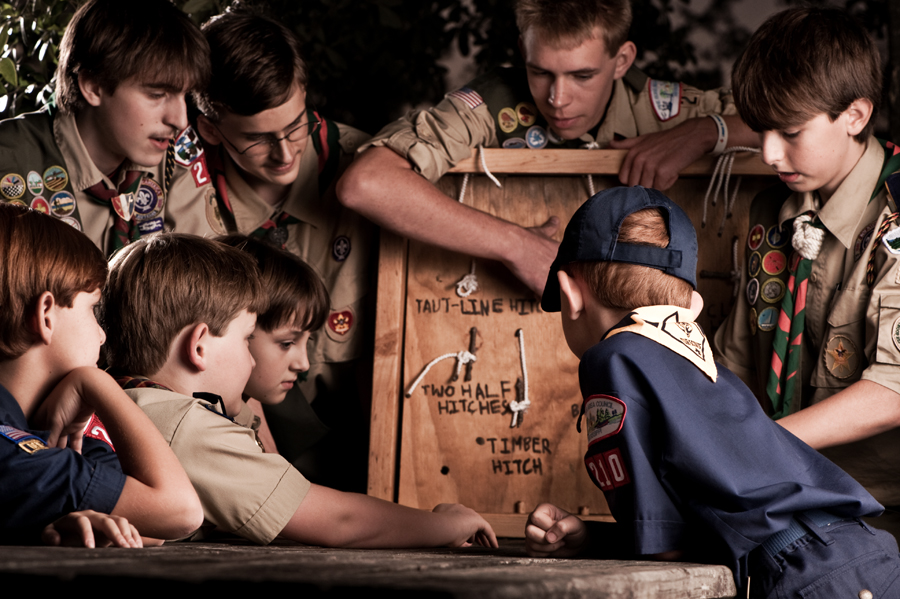
Below: Older scouts from Diamondhead, Mississippi donate their time to mentor the cub scouts of area packs that have been left leaderless from Hurricane Katrina. Many of the families of the scouts pictured here have lost most if not all of their worldly possessions in the aftermath of that disaster. It's a testament to the strength of this scouting community that these scouts and their parents still find the energy and time to get together regularly for scouting activities. An inspiring shoot to say the least. From April 2010 Boys Life.
James Davidson:
Great pics, brings back memories from my days in scouting and being stranded at Camp Ben Hawkins for a week during the Flood of '94...good times!! I should look back and see if I ever earned the photography merit badge!
(06.16.10 @ 05:14 PM)
Listed below are links to blogs that reference this entry:
A Boys Life
. TrackBack URL for this entry:
http://theblindmonkey.com/darkroom/mt/mt-tb.cgi/43
I first met David McLain a few years ago at an agency meeting in the Maine woods. He showed us a video called Santiago, and some of the multimedia projects he was working on for outdoor clothing maker Horny Toad. I was impressed by the mix of his editorial eye and commercial polish, and his innovative use of stop-motion and still photography. We had a conversation afterwards about the impending convergence of still and video technology and he said something about a "still/motion camera" that led me to use the term "stillmotion" for my work.
To prep for my workshop a couple weeks ago on stillmotion and breaking into new media at the Atlanta Photojournalism Seminar, and following on the interview with photojournalist and multimedia pioneer Ed Kashi, I spoke with McLain on his career with National Geographic and his multimedia production company, Merge. It's a look at how an established photographer is wasting no time taking risks and breaking new ground to keep things fresh. Listen up!

AK: How did you get started working for National Geographic?
It had been a dream of mine since high school. I took the slow approach. I'm a big believer that you gotta walk before you fly. Basically I shot non-stop at newspapers and smaller magazines for about a decade. Jose Azel helped me get a tray of slides (yes, i'm that old) together to bring down to DC and Susan Smith was nice enough to take a chance on me and give me a really small assignment which led to Zip Code assignments which led to feature assignments. Without Jose or Susan Smith it is very safe to say I never would have got the chance to shoot for National Geographic. You can check out the most recent story I shot for them in the January 2010 issue of the magazine.
AK: In 2003 you produced a short piece called Santiago. It's a short fluid motion piece filled with still images and sound that seems to bridge the gap between stills and motion picture. What was special about this piece?
To me what was special about the piece was that early on, Jerome Thelia (my business partner in Merge) and I started thinking about how we could bring his knowledge of post production together with my knowledge of photography in a way that pushed both of us forward to places we could not get on our own. While our techniques, tools, technology, and approach have changed since then, this is still the driving force behin Merge.

AK: How did you take that concept and create a production company around it? Was it hard getting clients on board, as a small boutique competing for campaigns against traditional big commercial production houses?
Well, we were both so busy doing our own thing, me with photography and Jerome with Post production for feature films and spots, that Merge was always a collaboration that happened when things happened to come our way. This was usually the result of clients that knew my still photography hiring Merge to create motion content. We're going to bump it up a notch next year though. 2010 will be the first time we are going to fully commit to Merge and be more strategic about growing it.
4. Though Merge seems to be mostly focused on commercial production, Your style is really authentic, with a sort of core outdoor lifestyle look, and your client list reflects that. Who have been some of your favorite commercial clients over the years? Do you ever turn a project down because it doesn't fit with your style?
Horny Toad, the California based clothing company, is the best client ever. Their CEO Gordon Seabury is really smart and their Art Director, Cari Carmean is one of my favorite people to work for. Gordon gives us the freedom to do our thing because he trusts us and Cari, Jerome, and I work in a very collaborative way. Its all about mutual respect and elevating each other.... you know, the 1+1=3 thing.... That's why we definitely turn down work that does not fit with our style.
AK: You shoot a lot on Red. What brought you to this particular setup?
It was a completely logical progression for us just as Scarlet and/or Epic will be. With Red and Jerome's back end system which includes Scratch, we own the means of production to shoot, edit, and post a feature length film. Think about that.... its incredibly powerful. Check out Jerome's post on our site about it for a more in-depth explanation.
AK: In maybe 5 years the technical landscape has changed radically with the convergence of still and video cameras. In 5 more years it will no doubt be radically different still. What is this convergence doing for storytelling? For commercial advertising production specifically?
We could talk for many beers about this but what is clear to me is that technology has opened up new production models for creating content and new channels to distribute it. At Merge, we spend a lot of time thinking about both of these things. Stories will always need to get told but moving forward the way in which many of them are produced, distributed, and consumed will change quite a bit. In light of this, it might be a mistake to stay totally tied to the old ways.

7. You strike me as adventurous in terms of embracing technological change and experimenting, while staying true to your style. On the other hand there is a lot of pressure to find simply chase new revenue streams, or to use new technology as a means of creating buzz. In the commercial advertising world, maybe that is still a valid approach. How do you strike a balance here?
Well, i've never been about chasing gimmicks and have always gravitated toward timeless visuals so its never really been hard to keep a balance. Sometimes, if you are being paid really well, money is a perfectly fine reason to take a job but most of what we shoot is exactly what we want to. While Merge provides new revenue streams for me, that is not why I co-founded the company. If you want to make money, go to Wall St. don't become a photographer. Merge is about a way to expand my craft and get the same stoke I got watching my first print develop in a tray of Dektol 25 years ago. I believe in evolving and life long learning which is why I am so into Merge.
AK: Feel free to let anything else fly if you have something burning to say. Thanks again for doing this.
Here is our new explanation of how we partner. We spend a lot of time thinking about it and I think it addresses many of the questions you bring up. Also, we should have some new work up on our site by the end of the month so be sure to check it out....
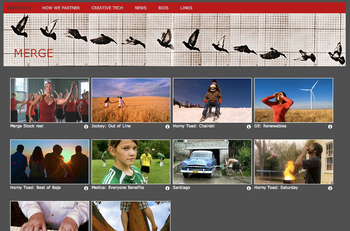
Merge conceives and creates visual content for the web, broadcast, print and beyond. We spend a lot of time thinking about shifts in our industry and evolving our craft: a combination of timeless imagery and fearless embrace of technology.
Merge unites the eye of a National Geographic photographer with a technical fluency built from two decades of post-production and production expertise. We cut our chops the old fashioned way but are not beholden to habits or structures that no longer make sense. The old paradigms for content creation, post and distribution have changed. At our core is an ability to to take traditional needs and seamlessly express them in old ways, new ways, and ways that have not been thought of yet. Whether it is our nimble production model, a blend of art direction and improvisation, the integration of stills and motion, site specific POS video installations, or the use of dynamic technology like 4K RED and Scratch. What people who have worked with us understand is that we are naturally adaptable and thrive at the intersection of tradition and change.
Our new model for creating visual content combines the right mindset, experience, and toolbox to offer high production values and efficiencies to our clients. We think of ourselves as partners rather than vendors and seek collaborations with clients that allow us both to get to places we would never arrive at on our own. To Merge is to break new ground and grow together.
Michael Carney:
inspiring. That's the only thing I have to say about that. Thanks Andrew and David!
(12.18.09 @ 06:26 PM)
Listed below are links to blogs that reference this entry:
Merge Lane: Interview with National Geographic Photographer and Producer David McLain
. TrackBack URL for this entry:
http://theblindmonkey.com/darkroom/mt/mt-tb.cgi/42
Manpower, Part 2:
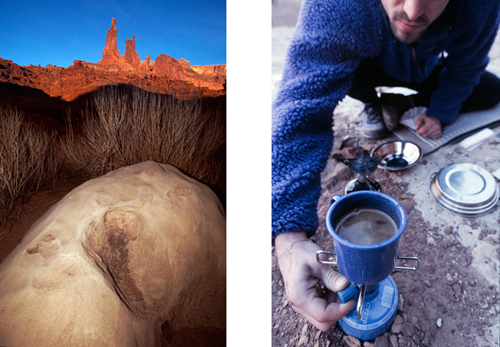
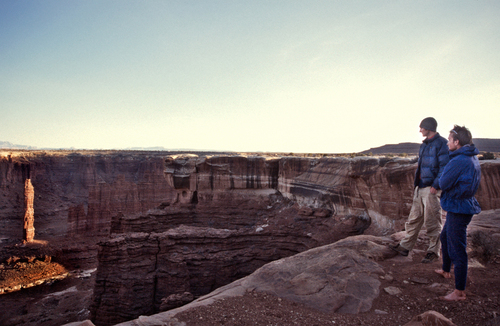
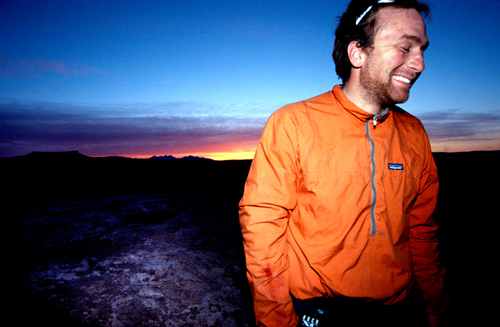
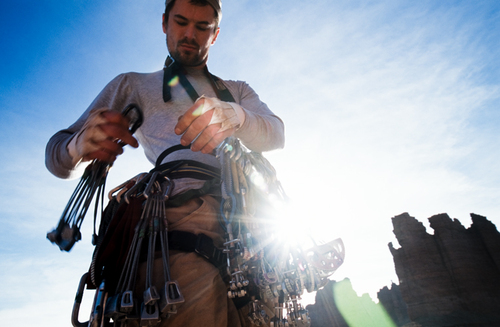
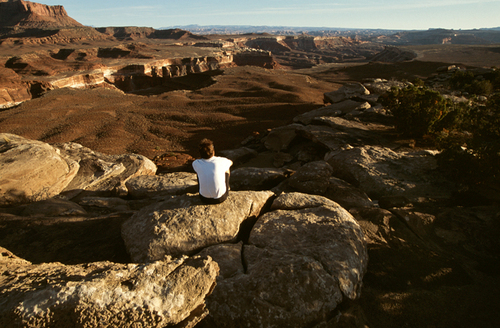
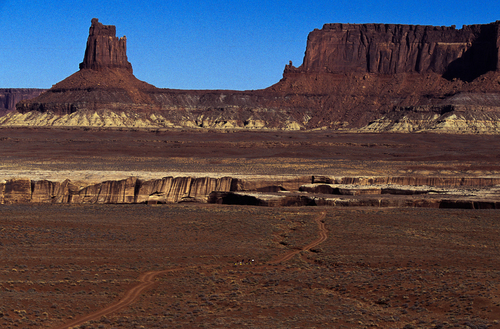
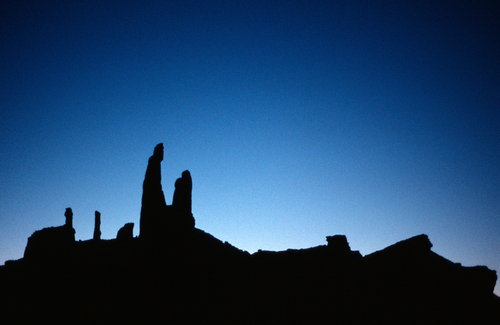
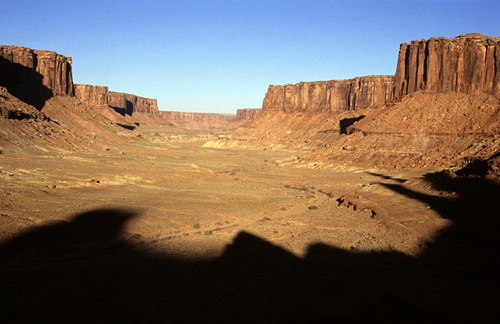
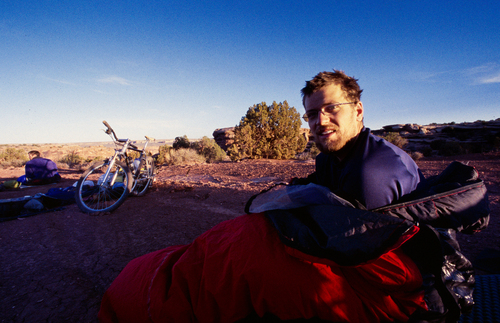
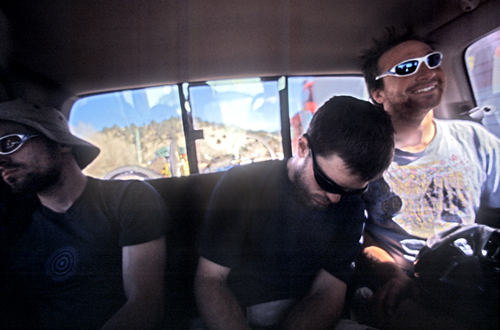
Washerwoman and Monster from camp. Zack stoking up.
Sunday, March 14:
Trent: It was getting late and I wanted to get back to camp before it got dark. I waited for Chaz to fiddle with his shoes and then fiddle with his pack. I didn't want to just leave him but I wonder if he realized that he was risking us having to walk down in the dark. We finally ended up descending to camp ourselves rather than waiting for Andy, Zack and Devin. I wonder if they were pissed that we didn't wait? Soon it was clear that we were lost. It was a little bit of a scary feeling, but we knew we couldn't be more than an hour from our camp. It was cold as soon as we stopped! Chaz was shivering and ended up spooning against me for warmth. I was not thrilled about it but "you got to do what you got to do". Then it started raining. ...I think I slept a lot better than Chaz. I suggested he wrap his legs with our Bluewater double ropes. It took half and hour in the morning to get all the knots out.
Chaz: An amazing day on washer woman and monster, and a long, fucking cold night pretty much sums up day 2.
Two towers in the bag. Heading out from the Monster group to Monument Basin
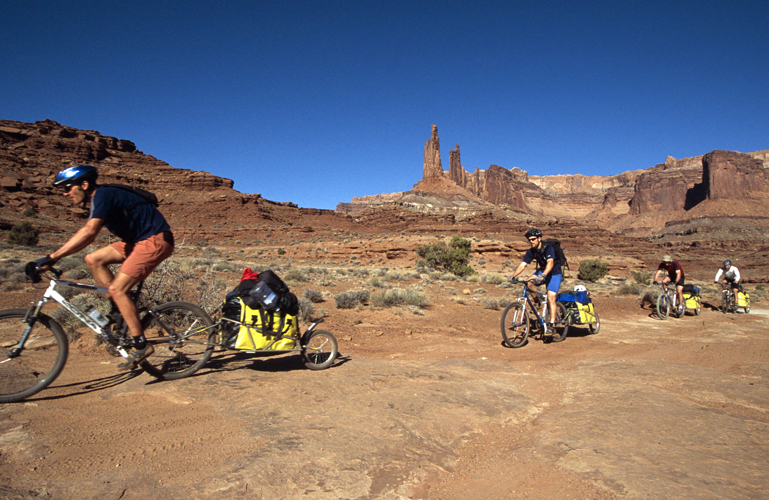
Trent and Chaz stumbled back to camp the next morning, just as the rest of us were gearing up for a rescue mission. They were tired and ragged-looking, but after hearing their story, our tension gave way to laughter, and with two towers already down, we decided to take an easy biking day and plan for the next climb, of Standing Rock, a 320-foot flute of layer-caked rock jutting from Monument Basin, 15 miles away. The climb was described in an old guidebook as "the most serious and dangerous route in the desert."
Nuts.
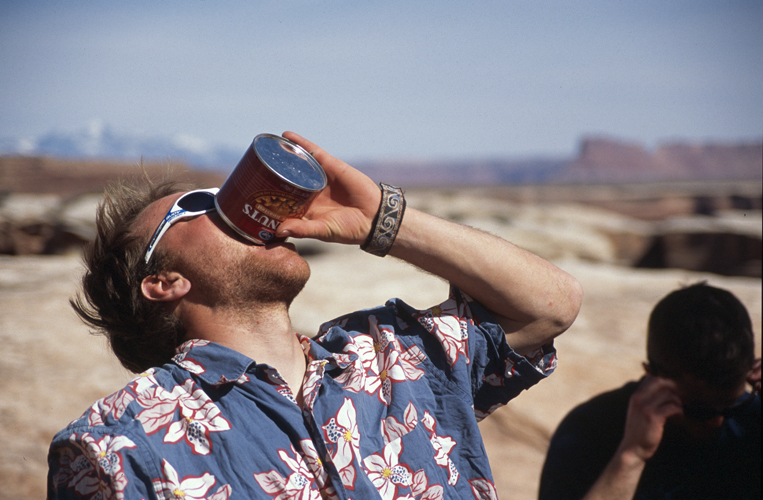
Monday, March 15:
Chaz: A pretty chill ride to Monument Basin and some resting under the shade of a juniper helped speed a recovery for the next day's ascent of Standing Rock, which will hopefully not topple over by morning.
Trent: Standing Rock looks like it's tipping over a little. I think we were all a little intimidated by how narrow it looked. Chaz and I took a nice nap while everyone else hiked in to check out the tower.
Standing Rock, just barely.

Zack: Tomorrow is the climbing day that tackles the tower. 4 pitches: 10b/c, 10d, 11c, 7. Lots of work and I'm trying to get my head together. I'm not concerned about act of doing the pitches; it just looks so sketchy from here. The tower looks like it could tip over at any strong breeze.. I'm sure it won't seem so thin and shaky when I'm 2 feet away from it. The desert is so beautiful!
Halfway through our trip, we were using more food and water than we had planned. We'd soon have to face some tough decisions about our style. During the next few days, the stress of climbing, biking and staying self-contained would test us.
Sunrise at Monument Basin
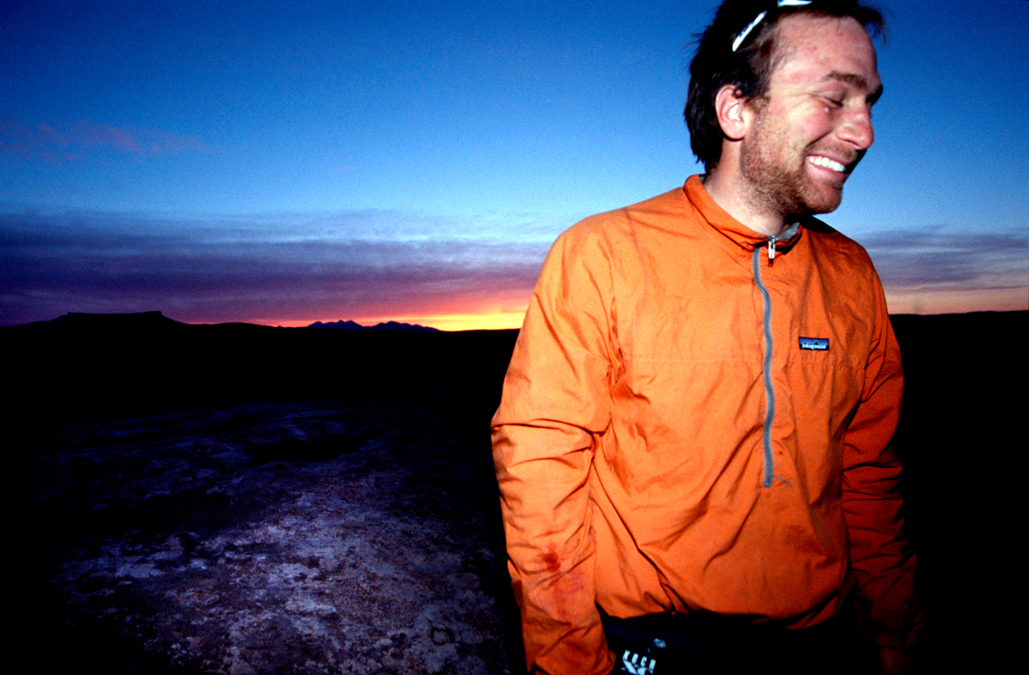
Tuesday March 16:
Zack: Gorgeous sunrise! An awe inspiring walk across the basin floor to the Standing Rock. One of the most eye catching, intimidating things I've ever climbed. Sketchy, and at 5.11c, harder than anything I'd done in the desert.
Desert Rack
Devin: Climbing Standing Rock went off without a hitch. As usual, Zack and Trent made it look easy and kicked ass on a lead that would have scared the shit out of me. Tomorrow will be a long, hard biking day, about 27 miles. Water is becoming somewhat of an issue.
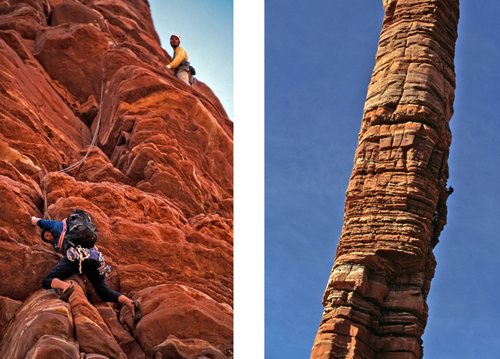
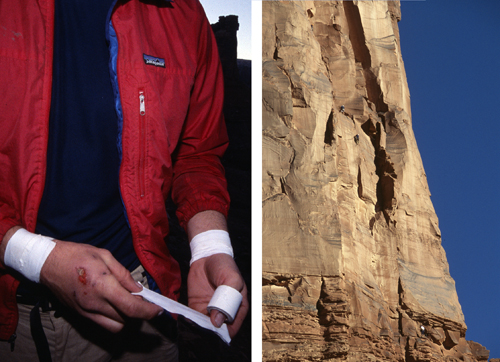
Left: Trent leading Devin up the first pitch of Standing Rock. Right: Pitch 2
Zack: We're down to two gallons of water a piece so it must be getting close to time to go home. I have one more tower to climb and lots of gnarly uphills to bike, but I know the end is within reach. Today was the roughest biking day so far. A lot of uphill pushing. These cadis flies and mayflies are about to cover me up.
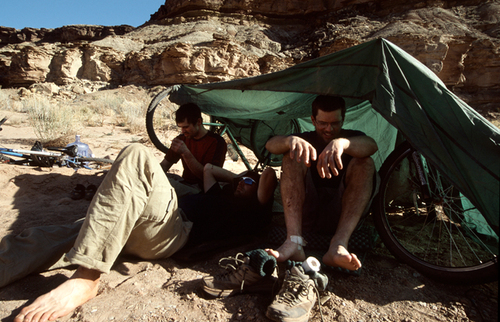
Chaz resting after the last hill of the day

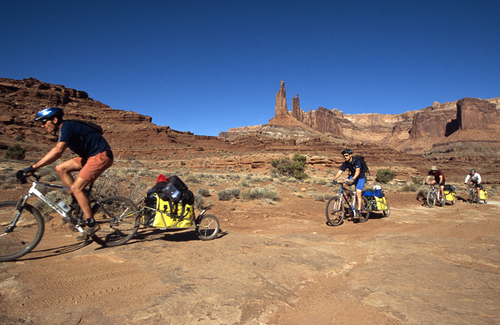
That afternoon we headed a few miles down the trail for another campsite. We had some gnarly climbs, and had to team up to push eachothers' bikes up the last hill. The riding was getting really hard and we had a day's worth of water left.
Miles to go. Headed down to the Green River on the longest biking day of the trip

The next day was a huge amount of biking, and as we neared the Green River, our only hope for water, we hit sandy sections you could barely walk, much less ride. I hung back a little, partly to take photos and partly because I was whupped. Chaz, being the strongest biker, was constantly offering to take gear from each of us to lighten the load, and always seemed to have an extra Snickers bar in a hidden pocket. As I crested the final hill to the river, I was astonished to see Trent filling two empty jugs with fresh water from a woman in a Jeep.
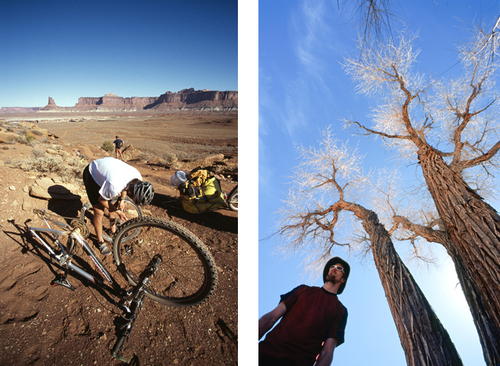
Left: Chaz on mechanical duty. Right: Zack under some rare shade near the Green River

Wednesday March 17:
Chaz: 10 miles of rolling downhill along the White Rim past Candlestick Tower brought us to the banks of the Green River. A casual lunch of peanut butter and tortillas followed by rest in the shade of a Cottonwood.
Trent: Some lady offered us water and I let her fill up one of my 2 gallon jugs. Then everyone else reminded me that we were self contained. I felt stupid. We then filled up some jugs of water with river water. Zack and Chaz swam in the river for a while. I really wanted to get as far as possible into Taylor before dark but I didn't feel like telling them not to swim. We started biking into Taylor Canyon towards Moses and encountered a lot of sand. Zack finally protested and said it was a waste to keep going all the way into the canyon. He said he had looked at the map and since it was relatively flat, it was going to be deep sand the whole way. We camped in the wash and made plans for an early hike and then climb. I sensed a little tension in the group. Zack explained how he knew the shit would hit the fan and how he was ready for it. Zack decided he would get up at 3:30am and hike the remaining 5 miles into Moses. ... I didn't say anything.
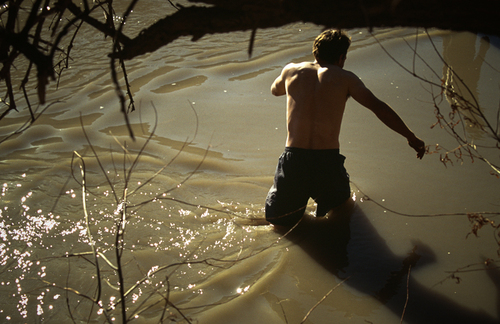
Chaz wading into Green
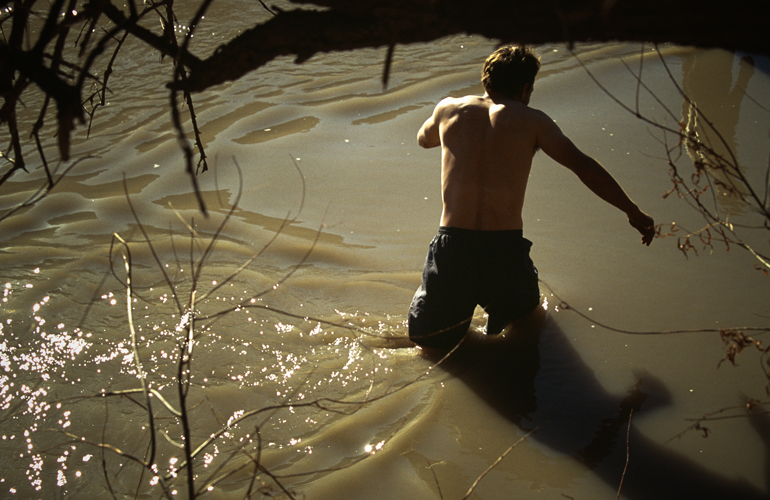
Zack: To think we climbed Standing Rock yesterday morning is sick. It seems more like a week ago! I'm tired and hungry. I'm down to less than half a gallon of water with two days left. We got water from the Green River today but it's murky and kinda sketch. Tomorrow we climb Moses, the last tower on the list. The approach is 6 miles off the main trail. We stopped, bivyed, and will wake up at 3:30am. The whole trip culminates tomorrow. Today was the first sign of difficulties. Team dynamic becomes apparent and very visible. I believe now is go time. Buckle down, do the deal, whatever it takes. Climb Moses and get the hell out of here self-contained, under Man Power!
3:30 AM. Moses.
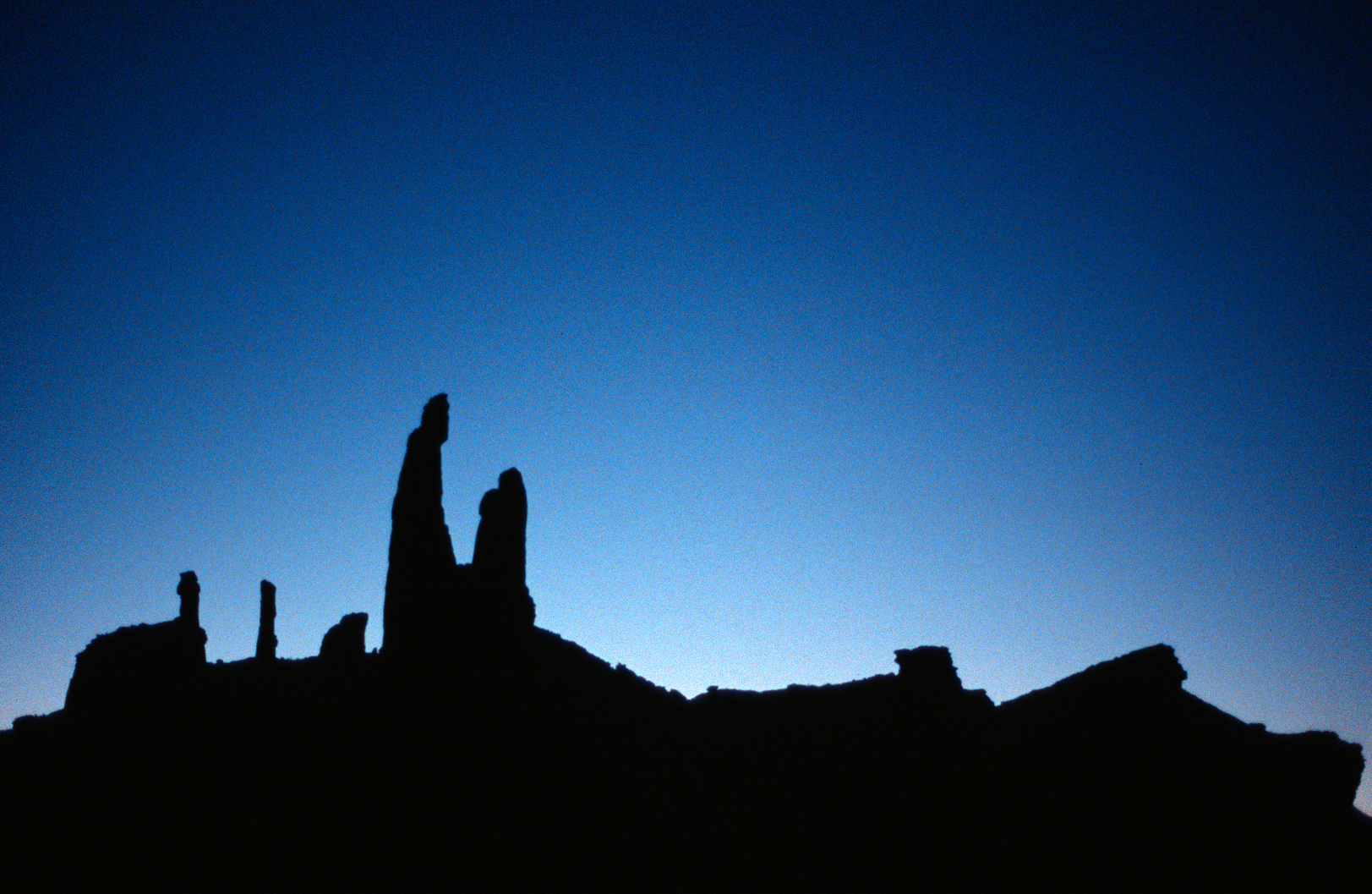
Thursday March 18:
I was personally pretty cashed and I knew this day would be a killer. We thought we could bike the 6 mile approach from camp, but it was all soft sand, so it turned into a 12 mile round trip hike. Pretty much out of food, and with the last water supply at camp, we had to decide whether to camp another night after the climbing, or gun for the trailhead on the canyon rim, a full days worth of biking away and uphill the whole way.
To try and speed things up, I decided not to join the team on the climb. I explored the area and photographed while everyone else tagged the summit. It was a beautiful day, but part of me regrets that decision.
Looking back 6 miles toward camp from the base of the first pitch of Moses

Trent at the base of Moses, and Primrose Dihedrals (5.11d), Pitch 1
Trent: We got up and hiked in to Moses. It was still very dark and cold. Chaz seemed extremely tired. He would take twice as long as me to follow the pitches. I felt bad and tried to console him even though I knew time was of the essence on the trip.
We took some cool photos on the summit and began rapping down the north face. We then began hiking back to our camp in the wash. It was getting extremely hot. We sat under one of the tarps and rested. Zack proposed the idea of biking all the way back to the truck and driving home. The map came out once again. I believe there was way too much map analysis. We made dinner and boiled water. I wanted to bivy but Zack and Andy were jacked on coffee and wanted to keep riding. A vote was taken and Chaz was the deciding vote to go all the way back to the truck. I was a little amazed after all the climbs we did together and how much he had slowed me down. I guess my emotion boiled up and I said "thanks a lot Chaz". He freaked out a little because he has this need to make everyone happy. He then said he wanted to camp at the top of the hill as a compromise. I could feel the tension between everyone.
Mid-day back at camp

After some grueling but mercifully hard-packed biking, we gained mesa at 9:30pm. The next morning at the rim we were elated. Though we had no breakfast and just a few sips of water left, everyone looked forward to a casual few hours of flat biking to the car. That's when most of the journal entries, and the photos, stopped.
Psyched! Devin on the morning of day 7.
Friday March 19 :
Andy: We suffered today. Out of water. We rode on seemingly endless hard pack, up and down hills, across a barren landscape, constantly stopping to examine the map, in hopes that we were getting to a shortcut that led to pavement. At the shortcut, I was bonking, so was Zack. I asked if anyone had food left. Chaz miraculously produced several Clif Bars, chocolate bars and a precious Snickers, which Zack and I devoured. Taking the last swig from my bottle, I felt at least able to go the 3 miles or so in the growing heat until pavement. The shortcut was twisty and sandy. Lots of walking, and silent resting under the paltry Juniper trees here and there.
I sucked my tea bag dry, which I had brewed last night in river water. The group was spread out. I saw what I am fairly certain were mountain lion tracks over the fresh bike tracks ahead of me on the trail. I thought about how the pride seeks out the weakest member of their prey, the lame one lagging behind. I increased my pace, but I had no more hammer left. I had kept a strong pace on the switchbacks last night, full of hype, but now as I realized that today would be at least as grueling as the last six, I was demoralized. I felt strangely sleepy and found myself thinking about how cool the sand might be to curl up into. How long would they go ahead before they turned back for me? Would they find me devoured by lions? Not such a bad way to go, I remember thinking...
And then we were at the road! No elation yet, we still had miles to go, but I found extra strength, my tongue swelling, stomach in knots, legs jello, brain pudding. I stupidly tried to shift my gears lower and lower, even though I was walking the bike.
Finally in the distance: the entrance station! I was so happy. We had put together this crazy project and here we were, finished!
Done, doner, donest.
We descended like locusts on the nearest convenience store, hungry, tired and elated. On the way out, passing the train of jeeps and trucks laden with bicycles and gear queued up for the Trail, we felt we had accomplished something truly special. By being bold in our objectives and committing ourselves to a principle, we had climbed a proud desert-rat's tick-list, biked a fat-tire dream ride, and spent six nights under the stars of the southwest desert, all in one trip.
To propel oneself slowly across the still-awesome American wilderness is a profound joy. The window of opportunity for this kind of adventure in our public backyard is still open to anyone, yet it dims and sags with time, neglect, and the "march of empire." Once that window is closed, we may gaze through it and remember, but it will be closed forever.
Listed below are links to blogs that reference this entry:
Manpower, Continued
. TrackBack URL for this entry:
http://theblindmonkey.com/darkroom/mt/mt-tb.cgi/37
Oh Boy oh boy!
Thanks!
I lack the tools but I'm always hungry fro video tutorials. :-)
Cheers!
(05.06.10 @ 12:35 PM)Hi Andrew
I have enjoyed my brief look at your work. I would like to understand where the benefit of high resolution fits in as with the exception of 4K projectors I can't see where I can view the clips in all their glory.
Kind Regards
Michael
(06.09.10 @ 08:12 PM)Hey Michael - thanks. There are some resolution benefits even with relatively low-resolution output. There is a lot more image information per frame to work with, and even when scaled, the difference is there (consider for example how large format photography looks on a postcard versus 35mm, or how cinema film looks better than standard definition even on a television) There is also the ability to crop and zoom. More interesting to me is that any frame could potentially be used in full (or nearly full-)resolution print.
(06.09.10 @ 09:04 PM)